Who Should Not Fast: The Honest Guide to When Intermittent Fasting Is a Bad Idea
Intermittent fasting gets marketed as universally good — but for a meaningful number of people, it’s a bad idea, and for some it’s genuinely risky. The honest guide the hype skips: who should avoid or be cautious with fasting, the warning signs to stop and why ‘more fasting’ isn’t always better. (This is orientation, not medical advice — talk to your doctor.)

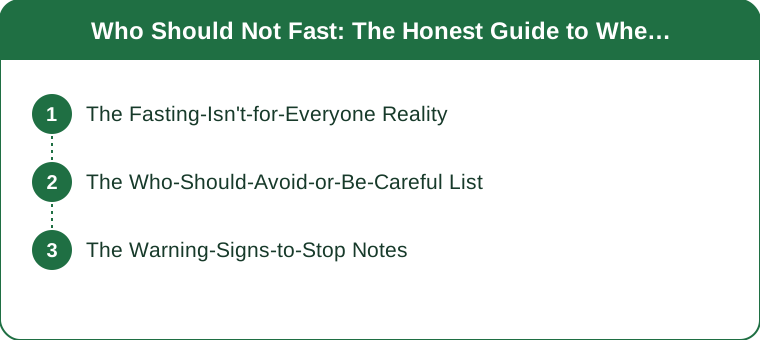
The Fasting-Isn’t-for-Everyone Reality
The honesty the hype skips: the not-universal truth (the fasting-helping-some, harming-others — the the-individual-reality; the the-not-for-everyone; the the-fasting-myths-women chapter’s nuance), the the-women-specific-considerations (the fasting affecting-women-differently, hormones-and-cycles — the the-female-physiology; the the-extra-caution-for-women; the the-hormonal-sensitivity), the the-not-magic reality (the fasting-as-one-tool, not-a-cure-all — the the-realistic-scope; the the-not-required), the the-can-backfire (the fasting-driving-overeating, stress or disordered-patterns for some — the the-backfire-risk; the the-not-always-helpful), the the-listen-to-your-body principle (the your-response over the protocol — the the-individual-response; the the-body-knows), and the reframe (the fasting as a tool-for-some, wrong-or-risky-for-others — the know-if-it’s-for-you; the the-honest-guide).

The Who-Should-Avoid-or-Be-Careful List
When fasting is a bad idea: the the-pregnancy-and-breastfeeding (the not-while-pregnant-or-nursing — the the-clear-avoid; the the-increased-needs), the the-eating-disorder-history (the fasting-risky with disordered-eating history — the the-serious-caution; the the-can-trigger; the the-avoid-if-history), the the-certain-medical-conditions (the diabetes, blood-sugar-conditions and others needing medical-guidance — the the-doctor-required; the the-medical-conditions), the the-underweight-or-nutritional-concerns (the fasting-wrong for underweight or nutrient-needs — the the-avoid; the the-more-food-needed), the the-medications-timing (the medications-requiring-food — the the-medication-conflict; the the-check-with-doctor), the the-high-stress-or-poor-sleep (the fasting-adding-stress when-already-depleted — the the-not-when-depleted; the the-cortisol-caution), the the-active-athletes-caution (the high-training-demands needing fuel — the the-fuel-the-training; the the-performance-caution), and the the-when-in-doubt-ask-a-doctor (the medical-guidance for the uncertain — the the-professional-input; the the-check-first).
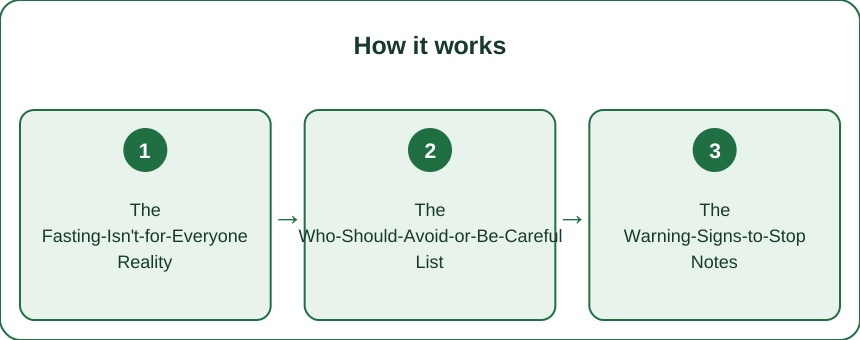
The Warning-Signs-to-Stop Notes
When to stop fasting: the the-preoccupation-with-food (the fasting-driving food-obsession — the the-disordered-red-flag; the the-stop-signal; the the-mental-health-priority), the the-binge-restrict-cycle (the fasting-then-overeating pattern — the the-backfire-sign; the the-unhealthy-cycle), the the-energy-and-mood-crash (the persistent-fatigue, irritability or poor-focus — the the-not-working sign; the the-depleted-signal), the the-sleep-and-hormone-disruption (the disrupted-sleep or cycle-changes — the the-female-warning; the the-hormonal-red-flag), the the-obsession-and-rigidity (the fasting-controlling-your-life — the the-unhealthy-relationship; the the-flexibility-lost), the the-physical-symptoms (the dizziness, weakness or concerning-symptoms — the the-see-a-doctor; the the-body-says-stop), the the-it’s-okay-to-stop permission (the fasting-not-working-for-you is-fine — the the-no-obligation; the the-other-approaches-exist), and the frame (fasting’s honest cautions through the not-for-everyone reality, the who-should-avoid list and the warning-signs — the know-if-it’s-wrong-for-you, and stop-if-it’s-harming; the fasting, kept honest and safe). Know if you should avoid it, watch for the warning signs, and stop if it harms: the fasting question, answered honestly.
Intermittent fasting is marketed as universally good, but for many it’s a bad idea and for some genuinely risky. Avoid or use extra caution if you’re pregnant or nursing, have an eating-disorder history, have diabetes or certain conditions, are underweight, take food-dependent medications, or are already depleted by stress and poor sleep — and women should be especially cautious. Stop if you notice food preoccupation, binge-restrict cycles, energy or mood crashes, or sleep and cycle disruption. It’s okay not to fast.
Keep Reading
This article is for general informational purposes only and is not medical advice. Always consult a qualified health professional for guidance specific to you.