How to Handle Intermittent Fasting When You Travel Across Time Zones
Quick Answer: The simplest approach for most travelers is to anchor your eating window to the destination’s local meal times from the moment you land, rather than trying to preserve your home time zone’s exact schedule — your body adjusts to a new eating window faster than most people expect, usually within one to two days.
Trying to maintain a home-time-zone fasting schedule across several time zones usually causes more disruption than just resetting to local time.

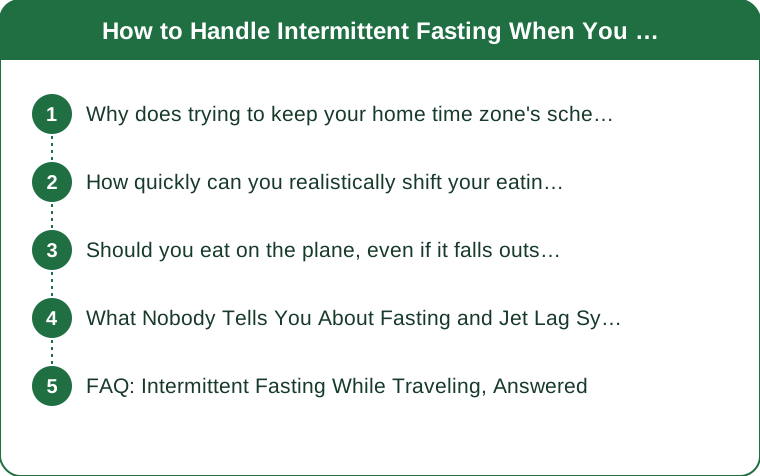
Why does trying to keep your home time zone’s schedule cause more problems while traveling?
Keeping your original schedule means your eating window shifts increasingly out of sync with local mealtimes, local light exposure, and local social eating opportunities — you might end up trying to fast through a local lunch or eat your only meal at 3am local time, which is both impractical and disruptive to sleep.
Light exposure and meal timing are both circadian rhythm cues, and having them conflict (eating at a time your body associates with night, based on light) tends to worsen jet lag symptoms rather than helping you adjust faster.
How quickly can you realistically shift your eating window to a new time zone?
Most people adapt to a new eating window within 1 to 2 days when they commit to it fully, similar to how sleep schedules adjust — the process is faster if you align eating times with local daylight and social meal patterns rather than trying to taper gradually across the destination’s day.
For trips under 3-4 days total, some people find it’s actually simpler to skip a rigid fasting schedule altogether for the trip’s short duration and resume it normally once home, rather than dealing with two schedule transitions in quick succession.
Should you eat on the plane, even if it falls outside your usual window?
For long flights specifically, eating a reasonable meal at a normal mealtime for your destination (not your origin) can help kickstart the adjustment to the new schedule, even if it technically breaks your typical fasting window that day.
Treating travel days as an exception to a normal fasting schedule, rather than trying to force strict adherence during a day with disrupted sleep and unusual food access, tends to reduce stress around the process without meaningfully affecting longer-term progress.
What Nobody Tells You About Fasting and Jet Lag Symptoms
Fasting and jet lag both independently affect energy levels, mood, and mental clarity, which makes it genuinely hard to tell which one is causing how you feel during the first day or two in a new time zone — this is a common source of unnecessary self-blame (‘the fasting isn’t working’) when jet lag is actually the bigger factor.
Giving yourself permission to loosen fasting rules for the first 48 hours after a significant time zone change, and reassessing once the jet lag itself has settled, usually gives a much clearer read on how the fasting schedule is actually going.
FAQ: Intermittent Fasting While Traveling, Answered
Should I fast during the flight itself to make adjustment easier?
There’s no strong evidence this speeds adjustment specifically — staying hydrated and eating at a reasonable time relative to your destination tends to matter more than whether you’re technically fasting during flight hours.
Does crossing time zones affect fasting differently for short trips versus long trips?
Yes — for short trips (under 4 days), many people find it’s simpler to relax the schedule for the whole trip, while longer stays usually justify fully adjusting to the local eating window.
Will a few disrupted days of fasting undo previous progress?
No, a few days of an inconsistent schedule due to travel has minimal long-term impact — the bigger risk to progress is usually giving up on the routine entirely afterward rather than the travel disruption itself.
TL;DR:
- Anchor your eating window to your destination’s local time, not your home time zone’s schedule
- Most people adjust to a new eating window within 1-2 days once they commit to it
- For short trips (under 3-4 days), relaxing the schedule entirely may be simpler than adjusting twice
- Jet lag and fasting side effects feel similar — give yourself 48 hours before judging how the schedule is going
Keep Reading
This article is for general informational purposes only and is not medical advice. Always consult a qualified health professional for guidance specific to you.