Intermittent Fasting Schedules Explained: Which One Fits Your Life?

Quick Answer: Intermittent fasting schedules mainly differ by how long your eating window is — a gentle 12-hour overnight fast, a moderate 14:10, the popular 16:8, or less common patterns like 5:2. The best schedule isn’t the strictest one; it’s the one you can actually follow consistently, comfortably, and safely.
You’ve probably seen someone online swear by a brutal 18-hour fast and wondered if you’re doing it wrong with your easy overnight window. You’re not. Intermittent fasting isn’t one rule — it’s a menu of schedules, and picking the wrong one for your life is the fastest way to quit by Thursday.
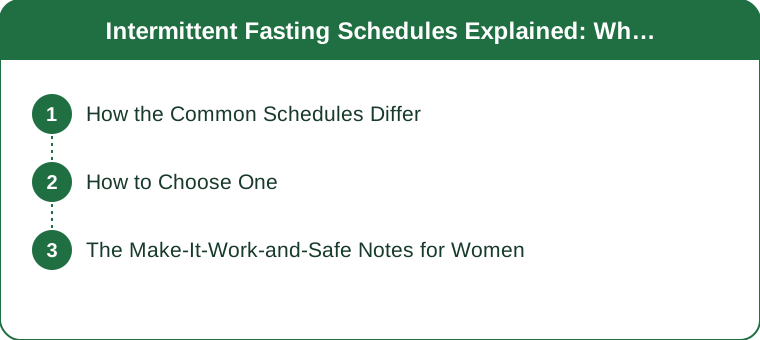
How do intermittent fasting schedules actually differ?
They differ mainly in one thing: the length of your eating window. Every version below is about when you eat, not what you eat.
- 12-hour overnight fast — the gentlest option and the easiest entry point. Basically: stop eating after dinner, eat breakfast at a normal time. Most people are already halfway there without trying.
- 16:8 — the most popular schedule, with an 8-hour eating window and a 16-hour fast. This is the one most people picture when they hear “intermittent fasting.”
- 14:10 — a moderate middle ground, gentler than 16:8 but still a step up from the 12-hour version.
- Other patterns, like 5:2 (near-normal eating five days a week, restricted eating two days), also exist, though window-based schedules like the ones above are far more common in practice.

Schedules vary a lot in how restrictive and flexible they feel day-to-day — which is exactly why “just do 16:8” isn’t universal advice.
How do you choose the right fasting schedule for you?
Start gentle. Begin with a 12-hour or 14:10 window before jumping to anything stricter — you can always tighten the window later once it feels easy, but starting too aggressive is how most people burn out in week one.
A few questions worth asking yourself:
- Does this fit your actual routine — your work schedule, your meals, your workouts — or does it fight against it?
- Are you a breakfast person or not? If skipping it feels miserable, a schedule built around an early eating window will feel like a fight every single day.
- When do you train? Time your window around your workouts so you’re not trying to lift heavy on empty for hours.
- Can you sustain it without white-knuckling? A window you can hold without gritting your teeth beats a stricter one you abandon in two weeks.
- Does it fit your social and family meals? A schedule that fights your usual dinner time with family or friends is a schedule you’ll break constantly.
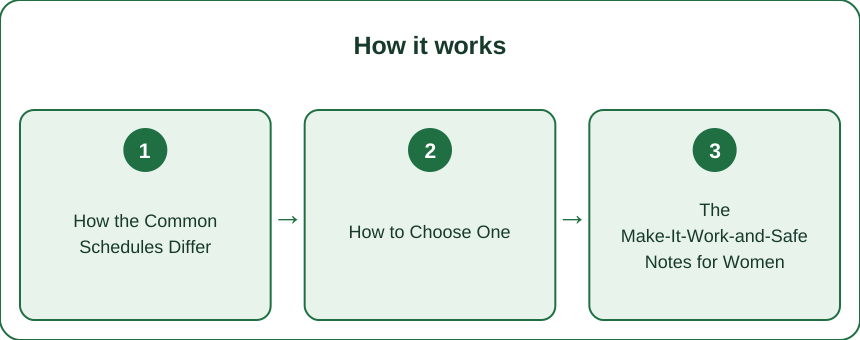
Experiment and adjust. The best schedule, genuinely, is the one you can keep — not the one that sounds most impressive.
Is intermittent fasting safe for women, and what should you watch for?
A few notes worth taking seriously:
- Women often do better with gentler windows — 12 to 14 hours — rather than jumping straight to 16:8.
- Quality still matters inside the window. Eating balanced, nourishing meals beats using the window as an excuse to eat junk.
- Don’t under-eat. Make sure you’re getting enough total calories and protein in your window — fasting isn’t meant to mean under-fueling.
- Stay hydrated during the fast. Water, plus black coffee or tea if you want it, is fine during the fasting hours.
- Listen to your body. If fasting causes issues with your energy, mood, or cycle, that’s a signal to ease off, not push through.
- It’s not for everyone. Those who are pregnant, have a history of disordered eating, or have certain health conditions should avoid fasting.
- When unsure, ask a provider. If you have any underlying health condition, check with a doctor before starting.
Mistakes everyone makes with intermittent fasting schedules
“Mistakes Everyone Makes”
- Jumping straight into 16:8 because it’s the schedule everyone talks about, instead of easing in with a 12-hour or 14:10 window first.
- Treating the eating window as a junk-food free-for-all. The window is about timing, not a license to skip quality altogether.
- Under-eating overall. Cramming too few calories and too little protein into a short window undercuts the entire point.
- Ignoring body signals — energy crashes, mood dips, or cycle changes — and pushing through instead of adjusting the schedule.
- Copying someone else’s exact fasting window without checking whether it fits your workouts, your family meals, or your body. The fifth mistake is the one that trips up even experienced fasters, and it’s rarely the fast itself — it’s the copy-paste schedule.
Mini FAQ
What’s the easiest intermittent fasting schedule for beginners?
A 12-hour overnight fast is the gentlest starting point — essentially not eating after dinner until a normal breakfast time. It eases you into the concept before you consider anything stricter like 16:8.
Is 16:8 or 14:10 better for women?
Neither is universally “better” — 14:10 is the gentler option and often suits women well as a starting point, while 16:8 works for those who’ve eased in and want a longer window. The right choice depends on how your body responds and how sustainable it feels.
Who should not try intermittent fasting?
People who are pregnant, have a history of disordered eating, or have certain health conditions should avoid fasting, and anyone with an existing health condition should check with a provider first. If a schedule causes issues with energy, mood, or your cycle, that’s a sign to stop and reassess.
TL;DR
- Fasting schedules mainly differ by eating-window length: 12-hour overnight, 14:10, 16:8, or less common patterns like 5:2.
- It’s all about when you eat, not what you eat.
- Start gentle and fit the schedule to your routine, workouts, and social life — sustainability beats strictness.
- Women often do better starting with gentler 12-14 hour windows.
- Eat quality, sufficient food (including enough protein) inside your window, and stay hydrated during the fast.
- Skip fasting if pregnant, if you have a history of disordered eating, or certain health conditions — and check with a provider if unsure.
Keep Reading
This article is for general informational purposes only and is not medical advice. Always consult a qualified health professional for guidance specific to you.