Intermittent Fasting Myths: What Women Keep Getting Told vs the Evidence
Intermittent fasting attracts equal-and-opposite mythology: the miracle camp promises cellular rebirth, the alarm camp promises hormonal ruin. Both overshoot the evidence. The myth-check for women: what the research supports, where the caution is real and who should genuinely skip it. (Info, not medical advice.)

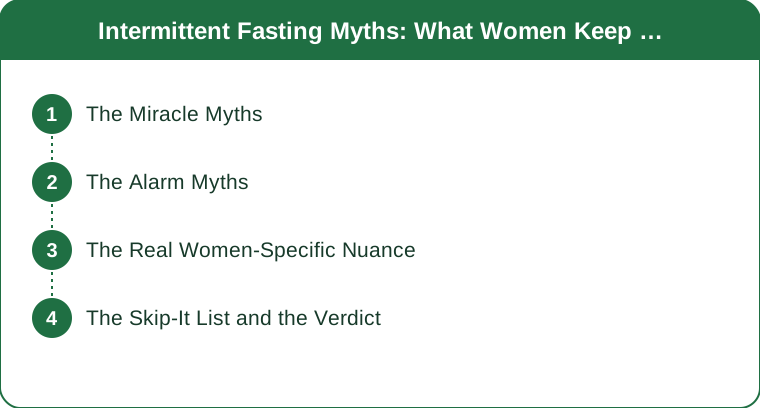
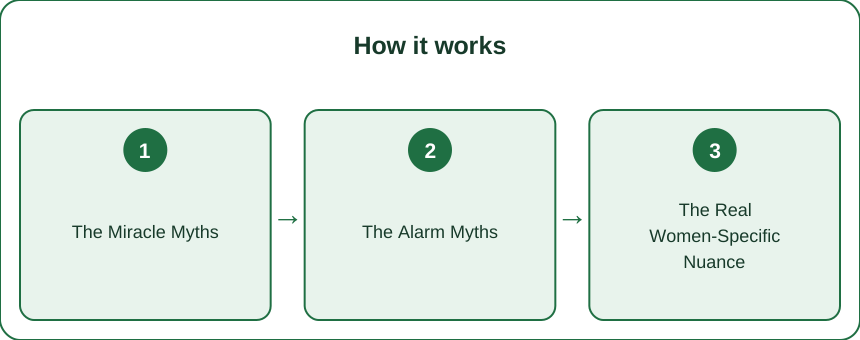
The Miracle Myths
The oversold claims: the metabolism-boost myth (fasting doesn’t accelerate metabolism — its weight-loss mechanism is unglamorous calorie reduction; the eating-window is portion control wearing a biohack costume, which is fine but not magic), the detox-and-autophagy marketing (autophagy is real cellular biology and its supplement-tier marketing outruns human evidence wildly — the 16-hour fast is not a cellular spring-clean subscription), the superiority myth (head-to-head trials keep finding IF ≈ ordinary calorie restriction for weight outcomes — it’s A tool, effective for people who find it easier, not THE tool), and the works-for-everyone framing (adherence research says the opposite — the skipped-breakfast misery of some is the effortless routine of others; the method’s whole value is personal fit).
The Alarm Myths
The overcorrected fears: the metabolism-crash claim (moderate fasting windows don’t wreck metabolic rate — the adaptive-slowdown evidence involves severe prolonged restriction, not a 14-hour overnight window), the instant-hormone-ruin narrative (the viral claims that any fasting destroys female hormones overstate a real nuance — see below; the 12-14 hour overnight fast is within normal eating variation for most), and the muscle-loss panic (protein intake and strength training protect muscle within reasonable windows — the fasted lifter who eats adequate daily protein keeps her muscle; the risk lives in low-protein under-eating, fasted or not).

The Real Women-Specific Nuance
The honest middle: the energy-availability sensitivity (female physiology monitors fuel supply closely — aggressive fasting stacked on hard training and low intake can disturb cycles; the RED-S mechanism doesn’t care whether under-fueling came from fasting or dieting), the research gap honesty (much IF research enrolled men or didn’t analyze by sex — the women-specific evidence is thinner and growing; confidence should match it), the gentler-protocol pattern (the 12-14 hour overnight window — the ‘stop eating after dinner’ version — captures most practical benefits with least hormonal noise; the aggressive 20-hour tiers are where caution concentrates), and the cycle-tracking application (the fasting experiment monitored against your cycle data — the personal evidence that outranks both camps).
The Skip-It List and the Verdict
Who shouldn’t: pregnancy and breastfeeding (energy demand seasons — full stop), any eating-disorder history (fasting’s structure can re-activate restriction patterns — the risk outweighs every benefit), the under-fueled athlete (training hard on chronically low intake — fasting adds the wrong ingredient), diabetics and the medicated (doctor-supervised territory), and teens (growing bodies eat). The verdict for everyone else: IF is a legitimate structure IF it makes your eating easier — the overnight-window version is the sane default, the plate’s quality still decides everything, and the tool that adds stress or steals workouts fails its own job description. Fit over fashion, evidence over both camps.
Not magic, not poison — a structure that suits some. Overnight windows are the sane default, protein and cycles get monitored, and the skip-list is real.
Keep Reading
This article is for general informational purposes only and is not medical advice. Always consult a qualified health professional for guidance specific to you.