The Best Time to Work Out While Intermittent Fasting (Based on What Your Body Is Actually Doing)
Quick Answer: Lower-to-moderate intensity workouts (walking, light cardio, yoga) generally work fine at any point during a fast, but higher-intensity strength or HIIT training tends to perform better either right before breaking your fast or within the eating window itself, since intense sessions benefit from more available glycogen than an extended fast typically provides.
Fasting and exercise timing gets treated as one universal rule online, when it’s really a matter of matching intensity to where you are in the fasting cycle.

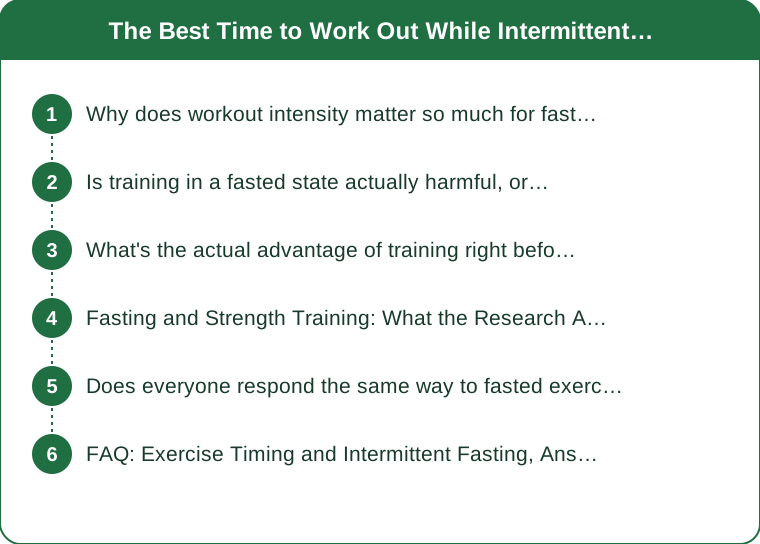
Why does workout intensity matter so much for fasted timing?
Higher-intensity efforts rely more heavily on readily available muscle glycogen, which depletes progressively the longer a fast continues. Lower-intensity activity draws more from fat oxidation, which remains steadily available throughout a fast — this is the core reason light movement tolerates fasted timing better than intense training does.
Is training in a fasted state actually harmful, or just less optimal for intensity?
For most healthy people, fasted training isn’t harmful for moderate sessions, but performance for high-intensity or heavy strength work is often measurably reduced compared to the same session performed fed. It’s less a safety issue and more a performance-optimization consideration for anyone specifically training for strength or power gains.
What’s the actual advantage of training right before breaking a fast?
Training right before your eating window opens lets you follow the workout with nutrients for recovery almost immediately, which some research suggests may support recovery and muscle protein synthesis timing better than training mid-fast with a long gap before refeeding. This timing captures some fasted-training benefits some report (like appetite and focus) while minimizing the downside of delayed recovery nutrition.

Fasting and Strength Training: What the Research Actually Shows
Current research on fasted resistance training shows roughly comparable long-term muscle and strength gains between fasted and fed training when total daily protein and calories are matched, though many report reduced ability to lift heavy in the fasted state itself. This means the choice is less about long-term results and more about immediate session performance and personal comfort level.
Does everyone respond the same way to fasted exercise?
No — individual response varies meaningfully; some people report feeling sharp and energized training fasted, while others feel noticeably weaker or lightheaded. This is a genuinely individual response worth testing carefully rather than assuming one approach universally applies, particularly for anyone new to fasting.
FAQ: Exercise Timing and Intermittent Fasting, Answered
Is cardio safer than strength training in a fasted state?
Generally lower-intensity cardio is well-tolerated fasted; high-intensity cardio carries similar intensity-related considerations as fasted strength training.
Should electrolytes be considered during fasted workouts?
Yes, particularly for longer or more intense sessions — fasted sweating without adequate electrolyte intake can worsen lightheadedness some people experience.
How long should someone try fasted training before deciding it doesn’t work for them?
A few sessions across different intensities gives a more reliable read than one difficult first attempt, since adaptation to fasted training does happen gradually for many people. This is general information, not medical advice for specific health conditions.
TL;DR:
- Light-to-moderate activity generally tolerates fasted timing well
- High-intensity training performs better near or within the eating window
- Training right before breaking a fast can support faster recovery nutrition timing
- Long-term strength gains appear similar between fasted and fed training when nutrition is matched
- Individual response to fasted training varies significantly — test rather than assume
Matching workout intensity to where you are in your fasting window, rather than following one universal rule, is what actually determines whether fasted training works well for you.
Keep Reading
This article is for general informational purposes only and is not medical advice. Always consult a qualified health professional for guidance specific to you.