16:8 vs 18:6 vs 5:2: Comparing the Most Common Fasting Schedules for Women
Quick Answer: 16:8 (16 hours fasting, 8-hour eating window) is the most beginner-friendly and sustainable schedule for most women. 18:6 is a moderate step up with a shorter eating window. 5:2 (eating normally 5 days, restricting calories significantly on 2 non-consecutive days) suits people who prefer not restricting daily but can handle 2 harder days a week. The ‘best’ one is whichever you can sustain consistently.
Fasting schedule advice often presents one method as universally superior, when the real differences come down to lifestyle fit and how your body responds. Here’s a direct, practical comparison of the 3 most common approaches.

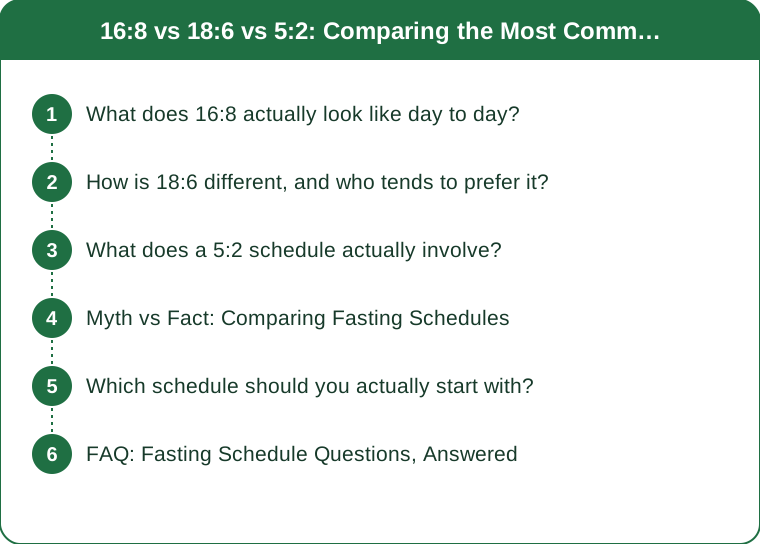
What does 16:8 actually look like day to day?
16:8 means fasting for 16 hours and eating within an 8-hour window - commonly something like eating between 12pm and 8pm, skipping breakfast, and having dinner as your last meal. This is generally considered the most beginner-friendly schedule because the fasting window largely overlaps with sleep, which makes the actual hardship shorter than the 16-hour number suggests.
Many women find this schedule sustainable long-term because it requires minimal daily planning once the eating window becomes routine, and it doesn’t require calorie counting unless weight loss is a specific additional goal.
How is 18:6 different, and who tends to prefer it?
18:6 shortens the eating window to 6 hours, adding roughly 2 more fasting hours than 16:8. This often means condensing to two meals within the window rather than three, which some people find simpler and others find harder to fit enough food and nutrients into.
People who’ve already adapted comfortably to 16:8 and want a slightly stronger fasting stimulus, or who naturally eat fewer, larger meals, tend to prefer 18:6. It’s generally considered a step up rather than a starting point for most beginners.
What does a 5:2 schedule actually involve?
5:2 involves eating normally 5 days a week and significantly restricting calories (commonly around 500-600 calories) on 2 non-consecutive days. Unlike 16:8 and 18:6, which restrict when you eat every day, 5:2 restricts how much you eat on specific days while leaving most days unrestricted.
This appeals to people who don’t want to think about eating windows daily but can handle 2 more intensive days a week - it tends to work well for people with unpredictable schedules where a strict daily window is hard to maintain consistently.

Myth vs Fact: Comparing Fasting Schedules
Myth: A longer fasting window always produces better results. Fact: Adherence matters more than the specific window length - a 16:8 schedule you follow consistently for months typically outperforms an 18:6 or 20:4 schedule you abandon after two weeks.
Myth: 5:2 is easier because you’re only restricting 2 days a week. Fact: Many people find the 2 restricted days genuinely harder in the moment than a daily eating window, since 500-600 calories is a significant single-day restriction - ‘easier’ depends on which type of difficulty suits you better.
Myth: Women should always choose the mildest option. Fact: There’s no universal rule that women need a gentler schedule than men - individual response, hormonal cycle, and lifestyle matter more than a blanket recommendation based on gender alone.
Which schedule should you actually start with?
For most women new to fasting, starting with 16:8 for at least 2-3 weeks before considering a stricter schedule gives your body and routine time to adjust. If 16:8 feels comfortable and you want more of a metabolic push, 18:6 is a reasonable next step; if daily windows feel too restrictive for your lifestyle, 5:2 is worth trying instead of forcing a daily approach that isn’t sticking.
Tracking energy, mood, and menstrual cycle changes during the first month of any new schedule is worth doing - fasting schedules can affect hormonal balance differently for different women, and adjusting or stopping based on how you actually feel matters more than sticking rigidly to a plan that isn’t working for your body.
A simple notes-app log of sleep quality, energy at midday, and cycle timing takes under a minute a day and gives you real data to look back on after a month, rather than relying on a vague overall impression of whether the schedule ‘feels right.’
FAQ: Fasting Schedule Questions, Answered
Can I switch between these schedules week to week?
Yes, many people do, especially adjusting for travel, social events, or how they’re feeling that week - consistency over the long term matters more than rigid adherence to one schedule every single day.
Is 5:2 harder on hormones than daily fasting schedules?
This varies by individual; some women find concentrated restriction days affect their cycle or energy more than daily time-restricted eating, while others find the opposite. Paying attention to your own response matters more than a general rule.
Which schedule is best for beginners specifically?
16:8 is generally recommended as the most approachable starting point because the fasting window overlaps significantly with sleep, making it easier to adjust to than schedules with longer waking fasting periods.
TL;DR:
- 16:8 is the most beginner-friendly, with the fasting window overlapping mostly with sleep
- 18:6 is a moderate step up with a shorter eating window and often just two meals
- 5:2 restricts calories significantly on 2 days instead of restricting timing daily
- The best schedule is whichever one you can sustain consistently, not the strictest one
Start with 16:8, give it a few weeks, and adjust based on how your body and schedule actually respond.
Keep Reading
This article is for general informational purposes only and is not medical advice. Always consult a qualified health professional for guidance specific to you.